


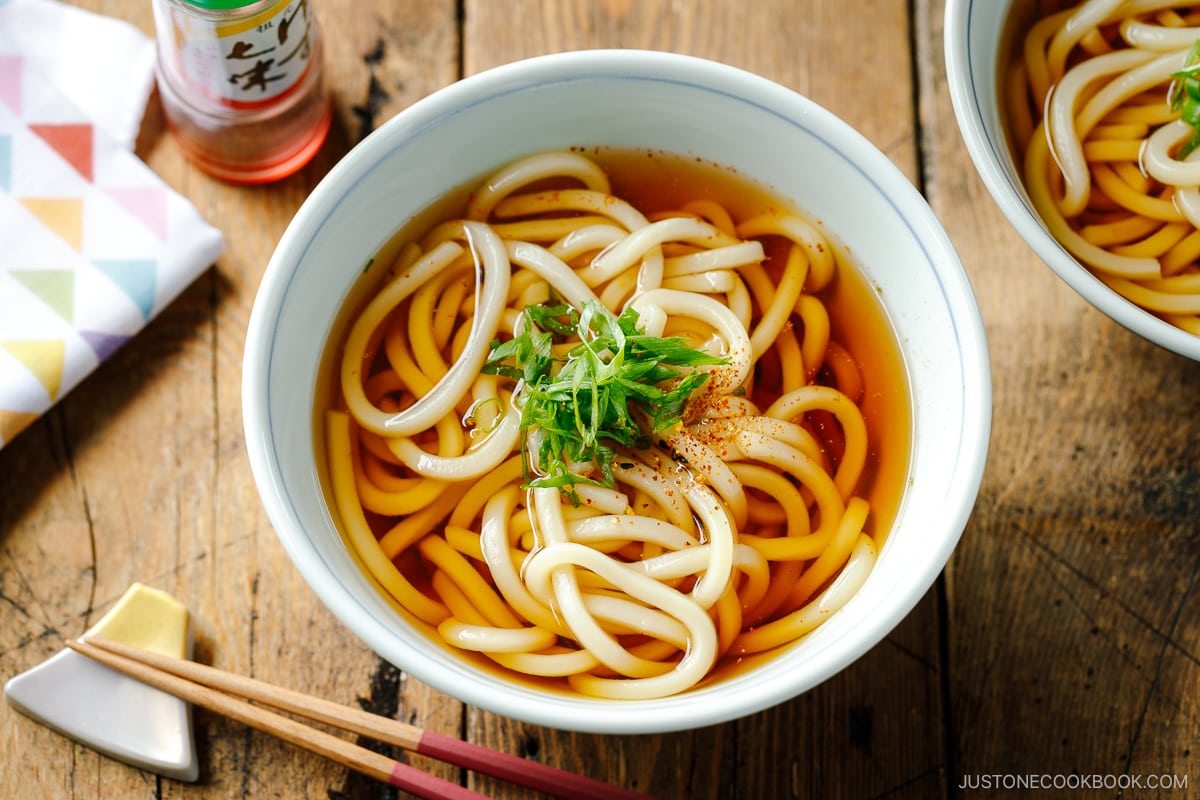
Of all the Japanese noodles, udon is my go-to comfort food. These thick, chewy wheat noodles have a unique way of satisfying hunger and soothing the soul. While there are many variations, nothing beats the simplicity of classic Kake Udon (かけうどん). Today, I’ll show you how to make an authentic bowl with my homemade soup broth for rich, umami taste or a quick version with store-bought soup base.
If you’re craving more Japanese udon recipes, try my Kitsune Udon, Beef Udon, and Yaki Udon (Stir-fried Udon Noodles) recipes next!
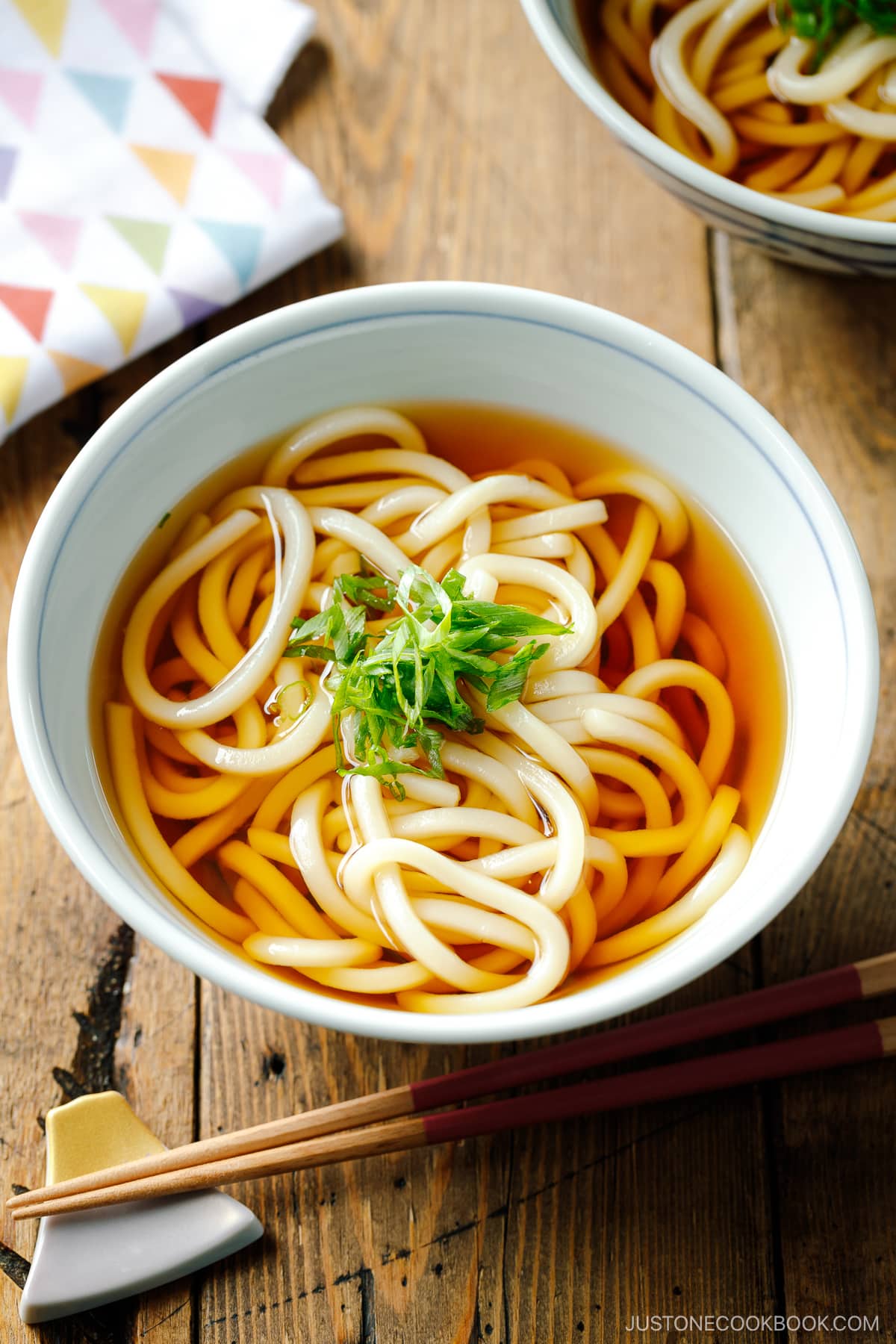
Ingredients for Udon Noodle Soup
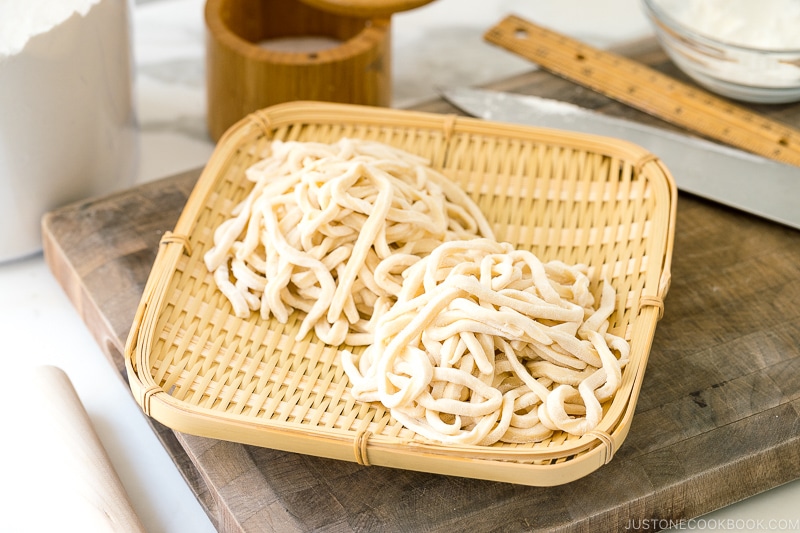
- Udon noodles - frozen (recommended)
- Homemade soup broth (or make the quick broth below):
- Dashi (Japanese soup stock) - For the best flavor, make Awase Dashi and Vegan Dashi from scratch before starting this recipe. Short on time? Use a Dashi Packet for a quick 5-minute stock!
- Mirin
- Sugar
- Soy sauce
- Kosher salt
- Green onions and optional shichimi togarashi (Japanese seven spice) - for garnish
Find the printable recipe with measurements below.
Jump to RecipeSubstitutions
- Udon noodles: For gluten-free, you can use rice udon noodles as well as gluten-free soy sauce or tamari soy sauce.
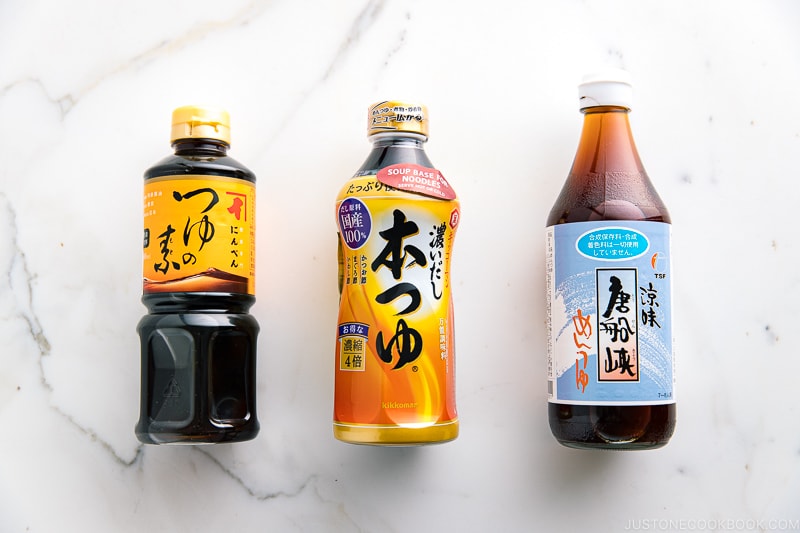
How to Make Udon Noodle Soup
Preparation
Step 1 - Make the homemade soup broth. In a medium saucepan, bring the broth ingredients to a gentle simmer, then cover it with a lid and set it aside. (Or, make my shortcut quick broth.)
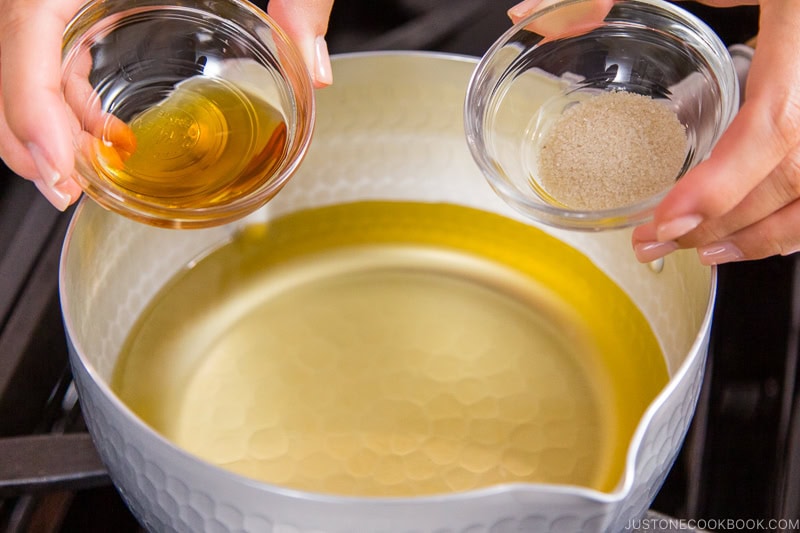
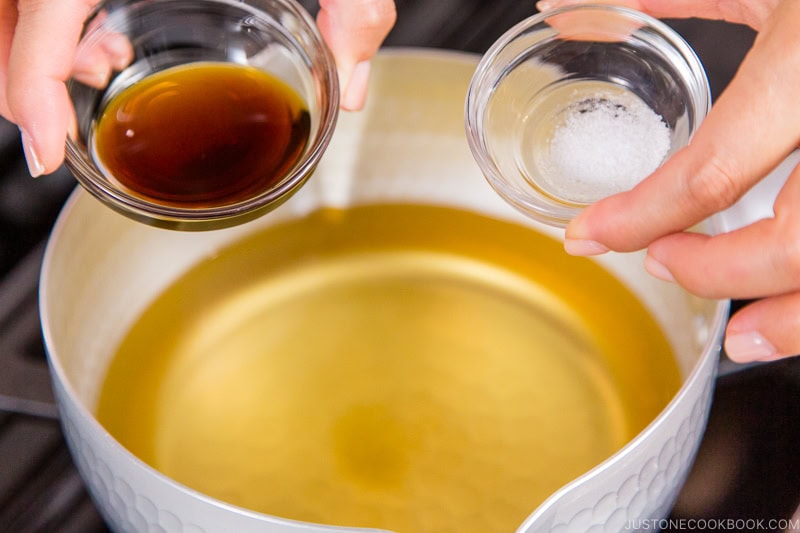
Cooking
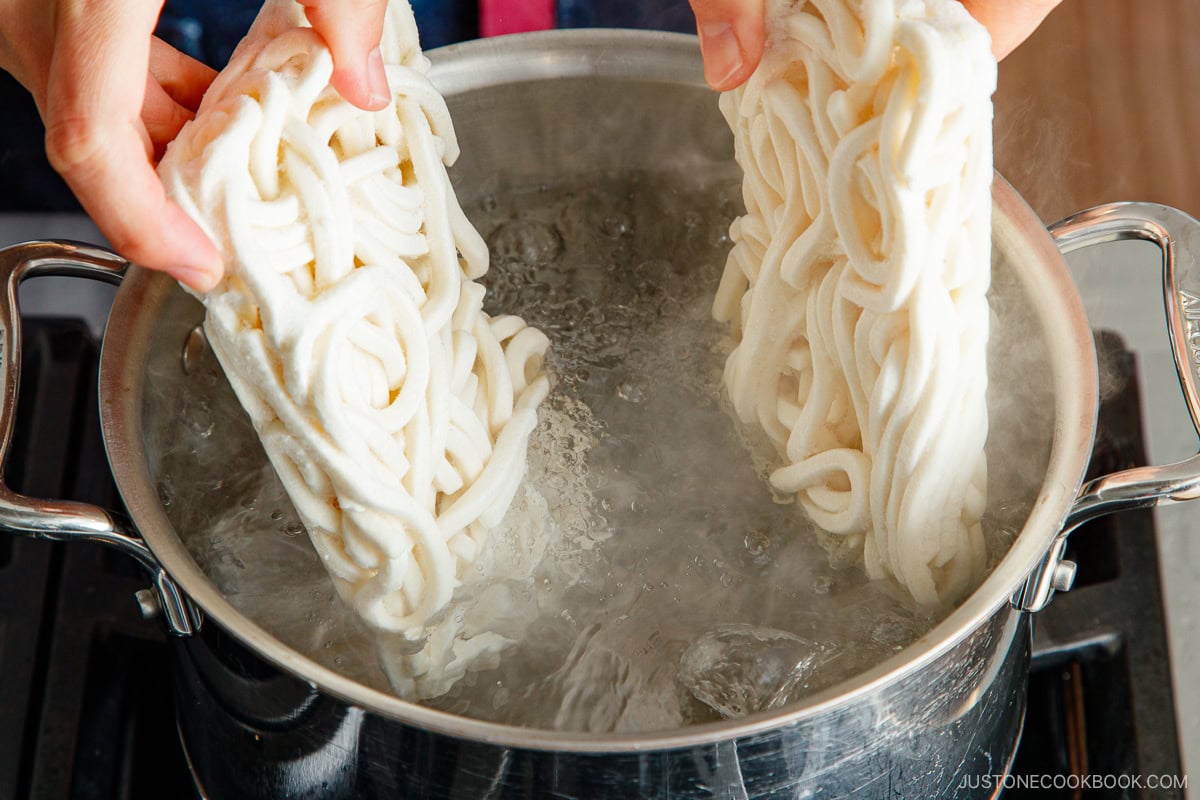
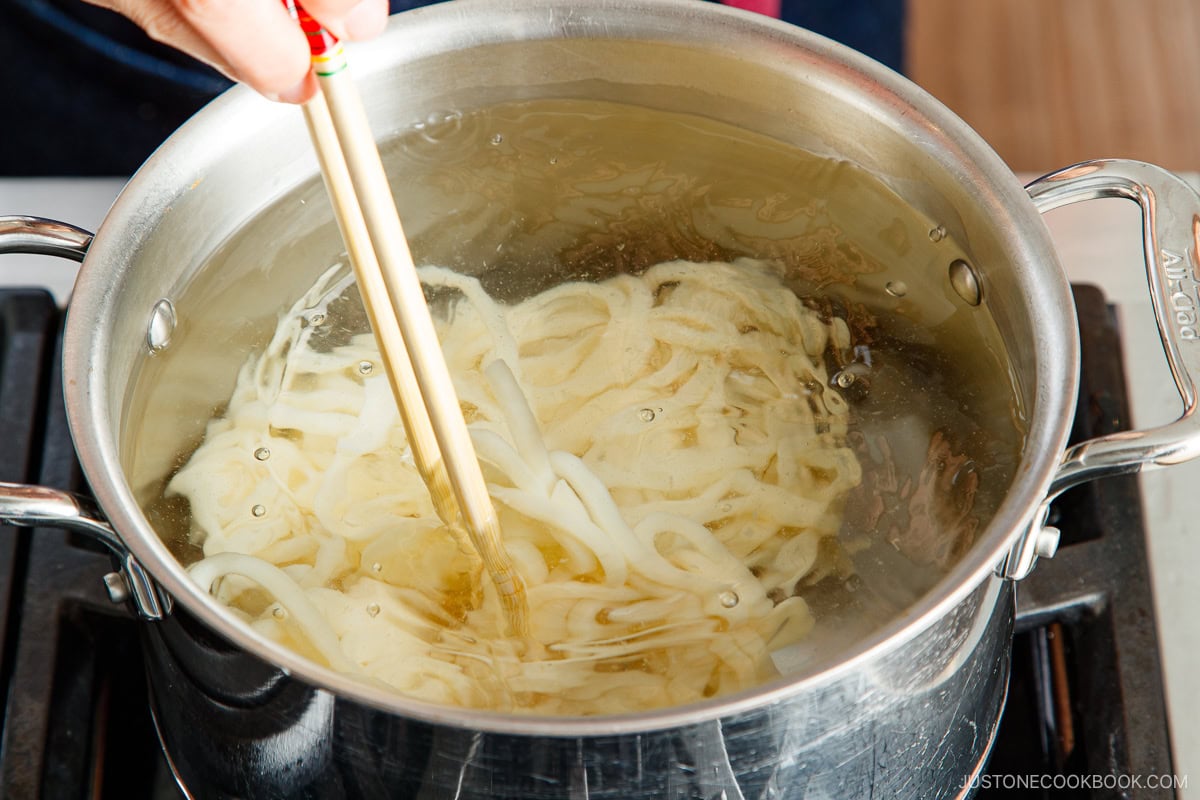
Step 2 - Reheat or cook the udon noodles. Bring a large pot of water to a boil, then add the noodles to reheat or cook per the package instructions. Stir to loosen up the noodles. Drain in a colander. Divide into bowls.
Assemble
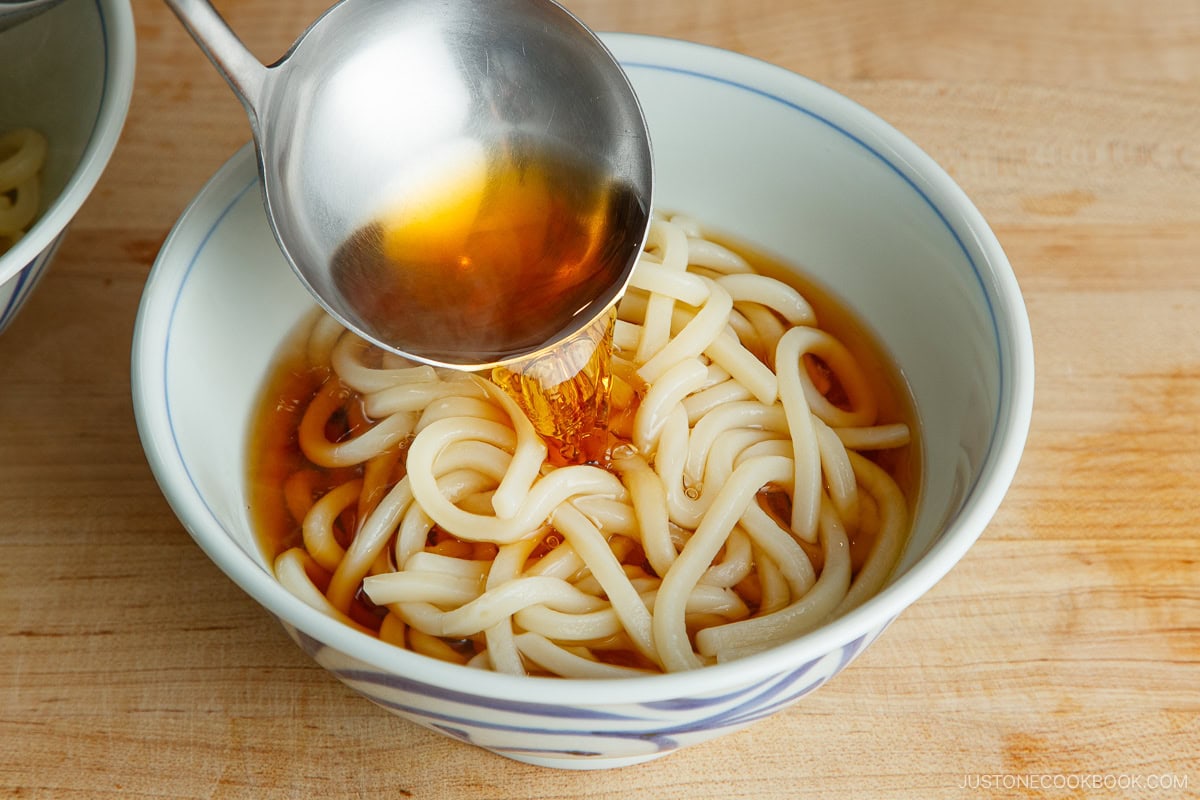
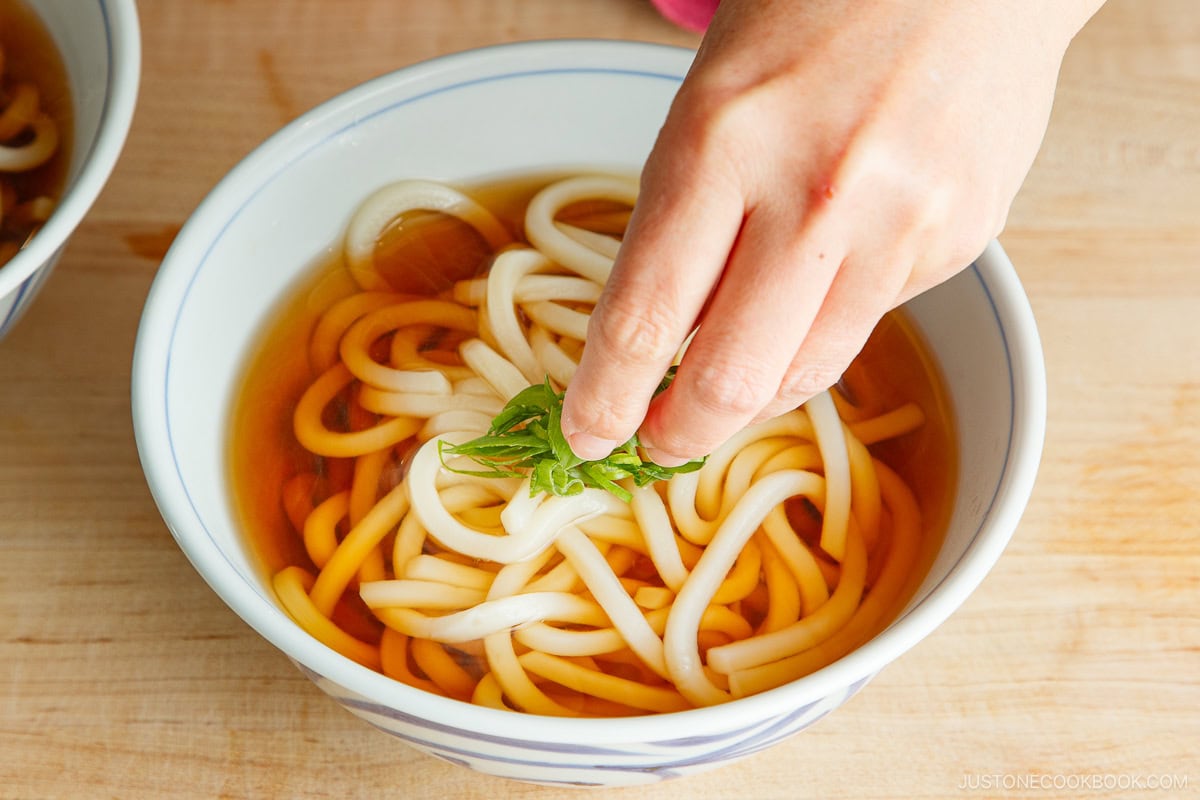
Step 3 - Pour the hot broth over the noodles. Garnish with thinly sliced green onion and optional shichimi togarashi for a spicy kick.
Customizations
There are many ways to customize this simplest of udon soups. I encourage you to experiment with different proteins and toppings for added flavor, nourishment, and variety.
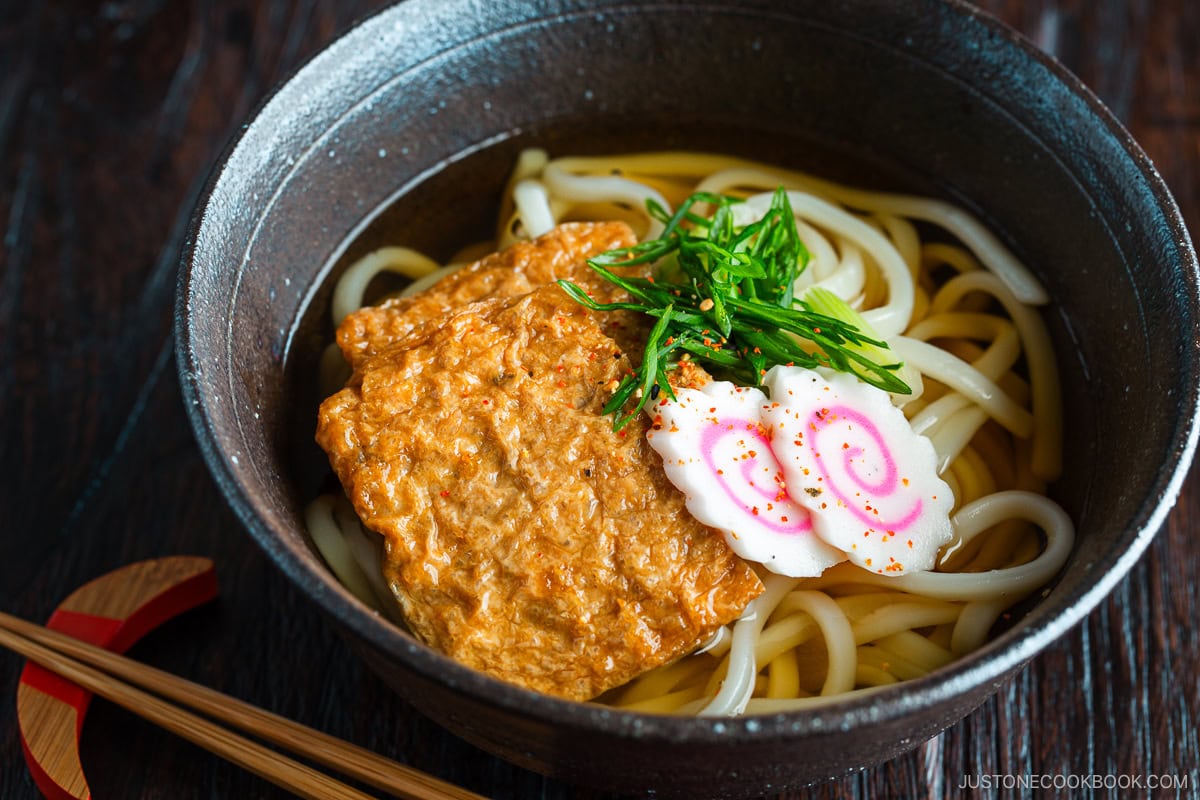
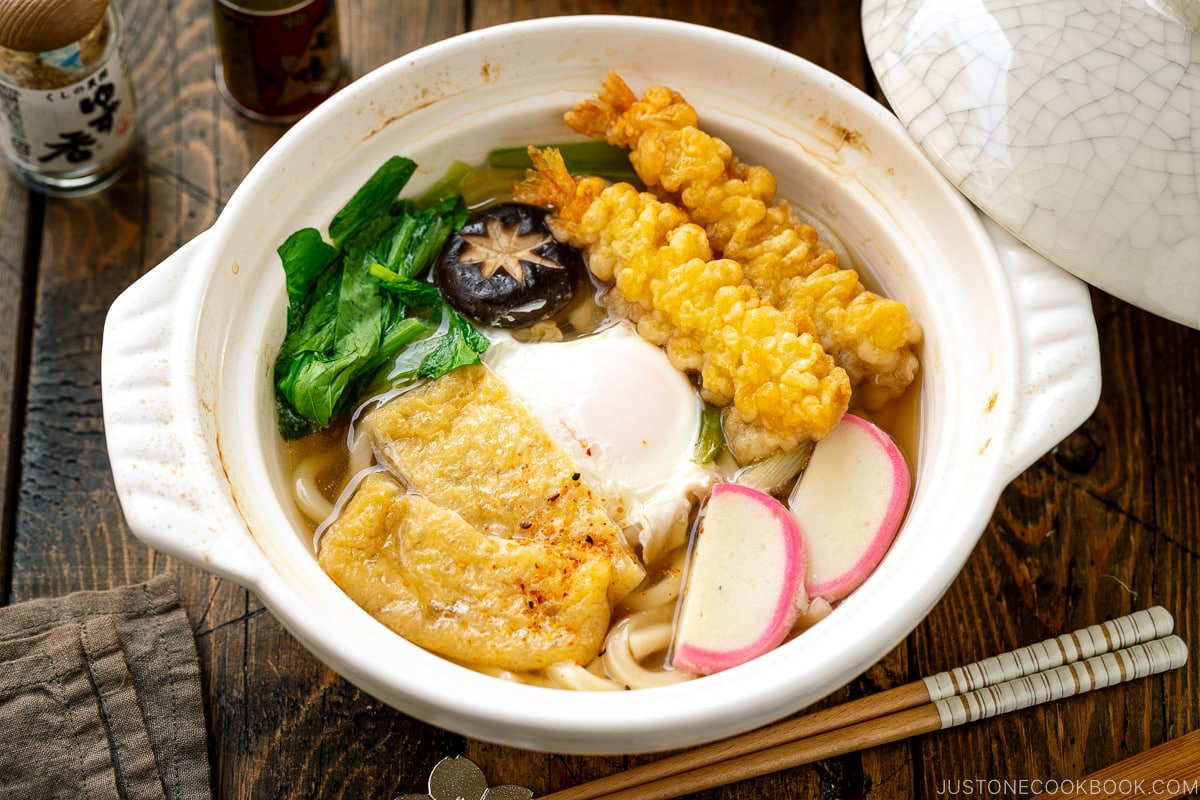
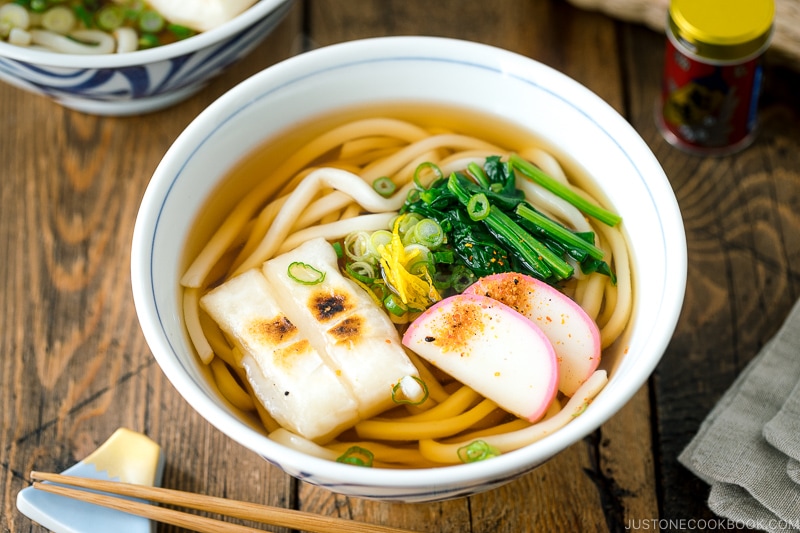
- Add protein. I like to use Shrimp Tempura to make a simple tempura udon. You also can add fish cake like kamaboko and chikuwa or deep-fried fish cake called Satsuma age. Tofu works well, too; try deep-fried tofu pouch (Inari age) or deep-fried tofu cutlet (atsuage).
- Top with vegetables. Try leafy greens like blanched komatsuna or spinach. Grated mountain yam called nagaimo/yamaimo adds a unique slimy texture.
- Sprinkle with yuzu zest. This aromatic citrus peel adds a refreshing touch. Check out my post on How to Store Yuzu Zest from your winter harvest!
- Add nutrient-rich toppings. My favorites are wakame seaweed, natto (fermented soybeans), and dried kelp shavings called tororo kombu.
- Add a spicy kick. While shichimi togarashi is a classic choice, other condiments that we love to use are yuzu kosho, sansho pepper, and Crunchy Garlic Chili Oil (taberu rayu).
Udon Variations
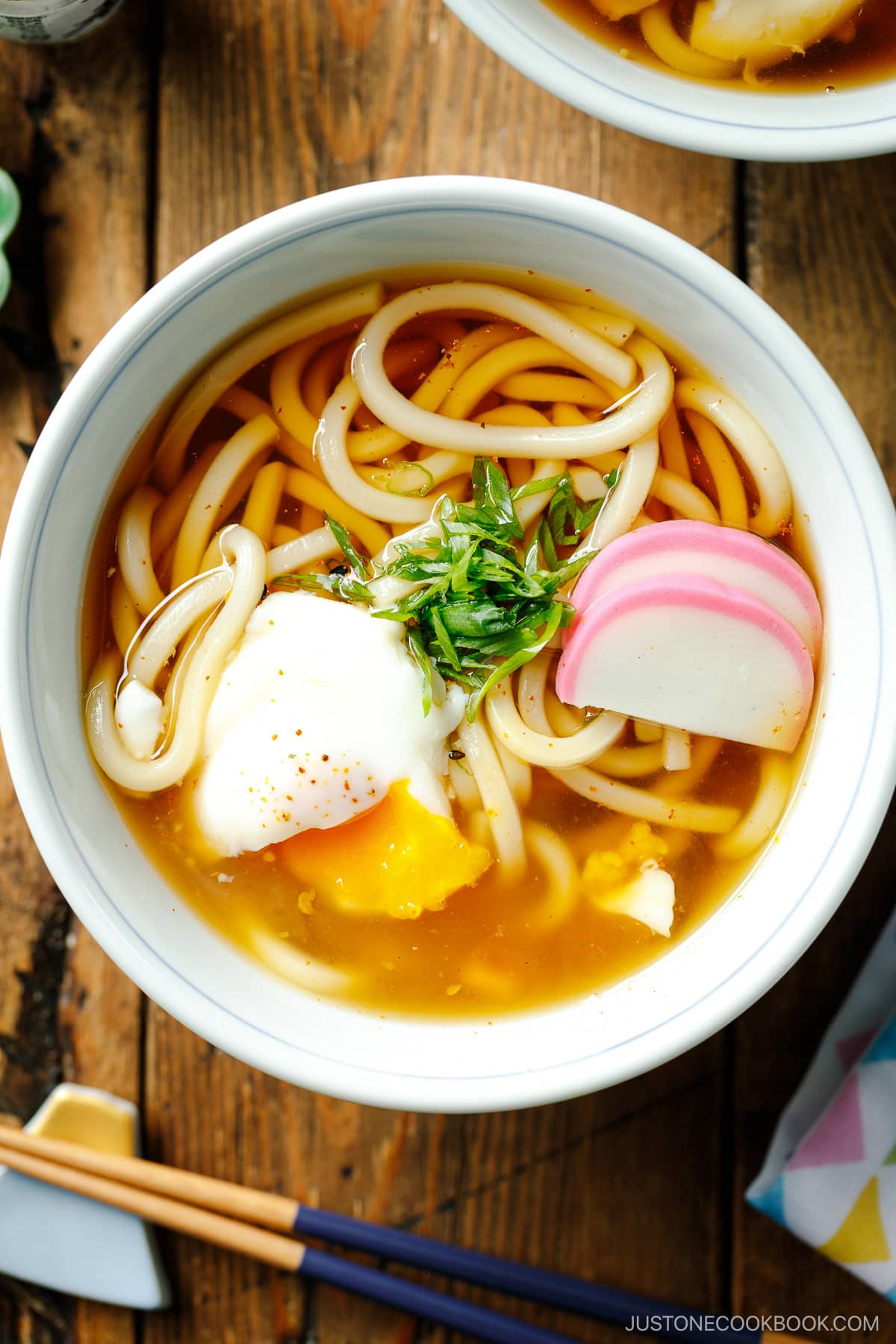
Add signature toppings to make popular udon dishes! In Japan, we have different names for udon soup depending on the toppings we use.
- Kitsune Udon - Add seasoned fried tofu pouches and pink-swirled fish cake (narutomaki).
- Nabeyaki Udon - Crack a whole egg and cook in the noodle soup.
- Tsukimi udon - Add a raw egg yolk on the top of the noodle soup.
- Tanuki udon - Sprinkle tempura scraps (tenkasu or agedama) over the hot udon noodle soup.
- Chikara Udon - Add a toasted mochi on top of the udon noodle soup.
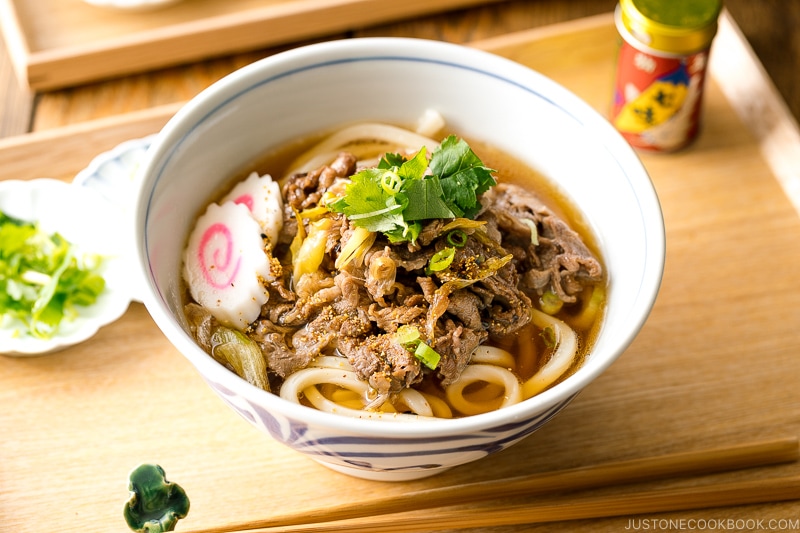
- Niku Udon - Add seasoned beef on top of the udon.
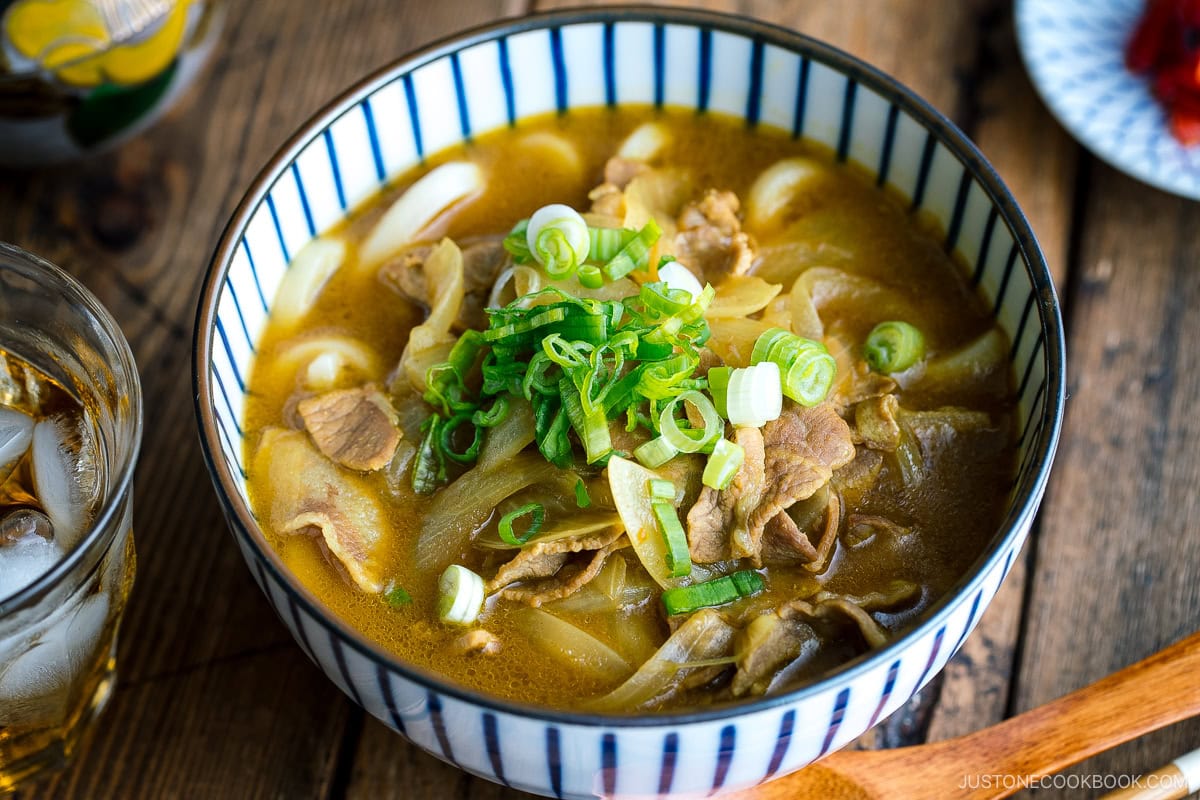
- Curry Udon - The soup is mixed with curry roux.
The possibilities are endless!
Storage Tips
To store: You can keep the udon noodles and broth separately in airtight containers and store them in the refrigerator for up to 3 days.
Frequently Asked Questions
Editor’s Note: This post was originally published on October 8, 2021. It was updated with new images and a new video on May 3, 2024, and republished with more helpful content on February 4, 2025.
